Granite: Brief Overview
Granite forms from the slow crystallization of magma below the Earth’s surface. It is composed mainly of quartz and feldspar with minor amounts of mica, amphiboles, and other minerals.
Granite is the rock most often quarried as a “dimensional stone” (a natural rock that can be cut into blocks or slabs of specific length, width and thickness). Granite is hard enough to resist most abrasion, strong enough to bear substantial weight, inert enough to resist weathering and it accepts a brilliant polish — in fact, granite is practically the only natural stone that will hold-up well outside in the polished finish!
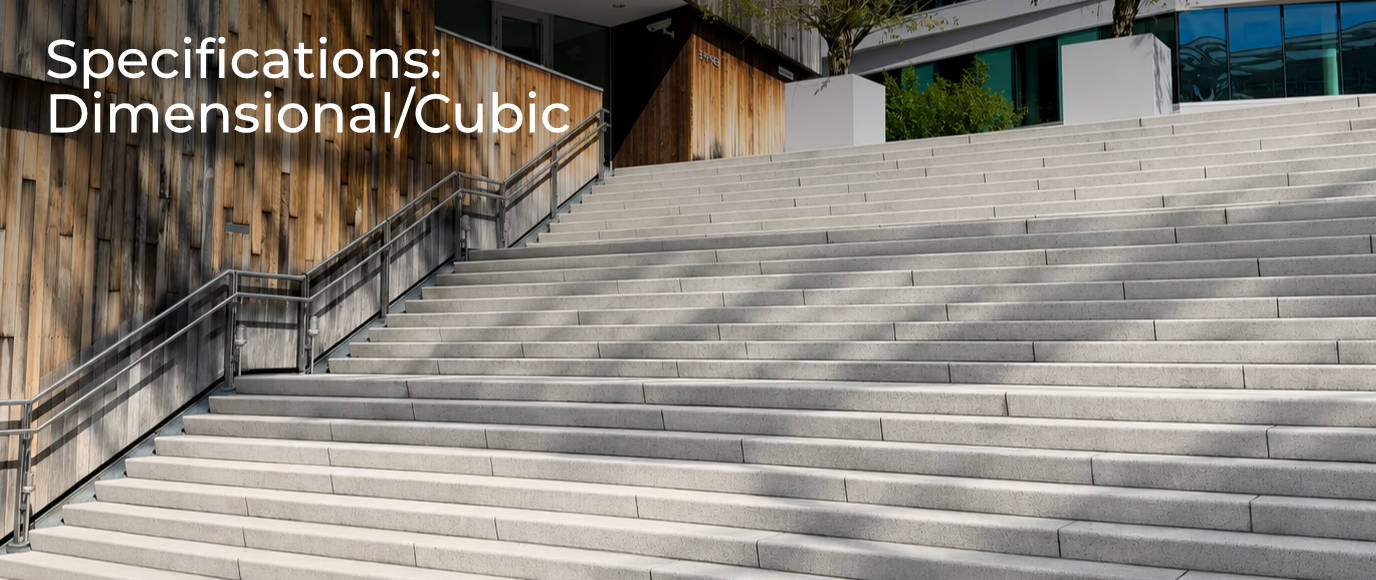
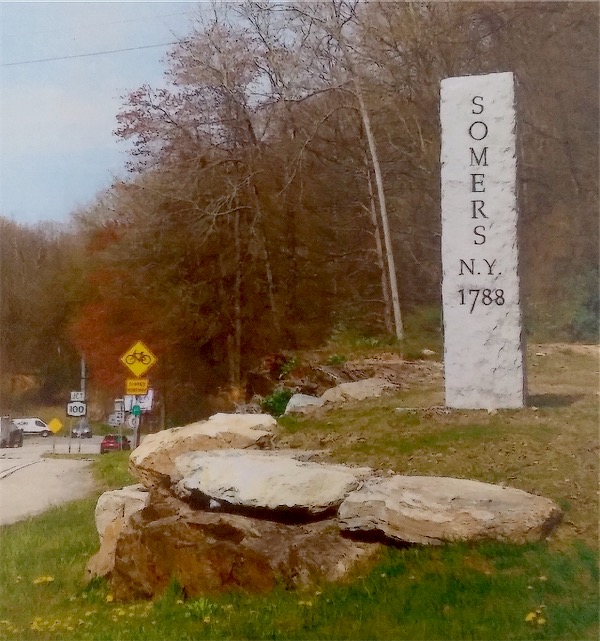
Rough-cut and Polished Granite is used for buildings, bridges, paving, residential and commercial facades, monuments and many other exterior projects. Inside, polished granite slabs and tiles are employed as counter-tops, cladding, flooring, stair-casing, and many other practical and decorative items.
Extraction
Granite extraction takes place in large, open pit quarries. Quarriers first assess the natural fractures and veins in the exposed rock bed. Heavy-duty hydraulic drills are employed to bore rows of deep holes along the perimeter of the desired stone sections. Workers then choose controlled explosives, expanding chemical agents, or heavy wire saws threaded through the drill holes to split and cut massive, multi-ton blocks of granite free from the quarry wall.
Location of respective quarries, capacity, ease of access for block extraction, proximity to processor, soundness of blocks and condition of infrastructure roads are factors that affect block and cut to size costs.
Processing and Manufacturing
Once the raw, heavy granite blocks are extracted, they are transported using heavy machinery to nearby fabrication or processing facilities. The manufacturing process involves:
• Slab Cutting: Large gang saws or diamond-tipped wire saws slice the rough blocks into standard, usable slabs (typically 2 cm to 5 cm thick).
• Polishing and Honing: The slabs run through multi-head polishing machines. Using progressively finer abrasive bricks and water cooling, the machines bring out the stone’s natural luster to create a high-gloss, semi-gloss, or matte-honed finish.
• Profiling and Edge Work: Specialty edge-profiling machines shape the sides of the granite (e.g., bullnose, ogee, beveled) depending on the intended use, such as custom kitchen countertops or architectural cladding. Specialty edge-profiling machines shape the sides of the granite (e.g., bullnose, ogee, beveled) depending on the intended use, such as custom kitchen countertops or architectural cladding.

Products Cut From Slabs
Fabricators use diamond-tipped saws and water jets to cut 2cm or 3cm thick slabs into:
Kitchen countertops
Bathroom vanities
Veneer and large wall panels
Interior and Exterior Paving
Custom stair treads
Products Processed Differently
• Floor and wall tiles: Often sliced from blocks using multi-blade gangsaws and calibrated in high-volume factories rather than individual slabs.
• Paving stones: Frequently split mechanically using hydraulic guillotines to create a natural, rugged finish or saw-cut for precise, crisp edging.
• Crushed stone: Exploded or mechanically crushed in the quarry, then sorted by size.
All Format Surface Finishes:
• Polished: High-gloss, reflective surface that intensifies color and stone patterns.
• Honed: Smooth, matte finish with no reflection, created by stopping the buffing process early.
• Leathered: Textured, matte finish achieved by brushing the stone with diamond-tipped bristles.
• Flamed: Alternating ultra-hot torching and high pressure-water are sprayed onto the slab’s surface–the high temperature and cooling fractures the stone thereby leaving the surface moderately rough and textured. Although this work can be achieved manually, it is commonly undertaken at factories equipped with automatic processing lines. The Flamed finish is common to granite but many other natural stones can also accept it.
• Waterblasted: Textured finish created by spraying the stone via pre-set multiple nozzles with desired volumes of high-pressure water. While similar in appearance to flaming, water blasting usually provides enhanced color and a moderately flatter surface. Although this work can be achieved manually, it is usually undertaken at factories equipped with automatic processing lines.
• Bush-Hammered: Pitted, slip-resistant texture made using a hydraulic tool with small pyramid points.
• Brushed: Slightly textured, satin finish made by wearing down the surface with wire brushes.
• Sandblasted: Coarse, granular texture created by blasting the stone with high-pressure sand.
• Tumbled: Aged, chalky appearance with rounded edges, achieved by tumbling smaller stones in a drum.
For specific installation methods, architectural details, and structural engineering techniques, please refer to the comprehensive guidelines published by the respective industry trade organizations:
- For Vertical Cladding, Facade CTS, and Cubic Works: Refer to the Natural Stone Institute (NSI) Architectural Design Manuals.
- For Sidewalks, Plazas, Driveways, and Roadways: Refer to theInterlocking Concrete Pavement Institute / Concrete Masonry & Hardscapes Association (ICPI-CMHA) Tech Specs for natural stone pavers.
- For Mortared and Rigid Structural Applications: Refer to theTile Council of North America (TCNA) Handbook for stone tile and paver installations.